Japan's Prime Minister Advocates for More Women's Toilets in Parliament
Improving Conditions for Women in Legislation
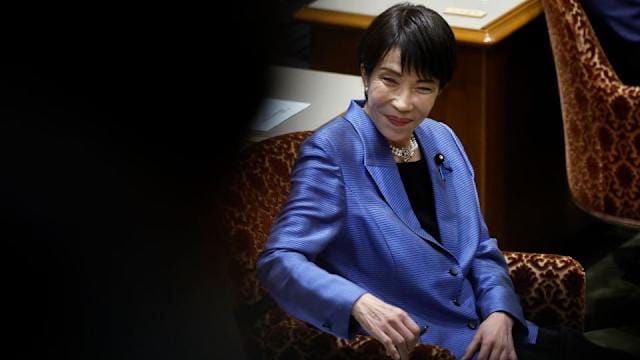
Japan's Prime Minister, Sanae Takaichi, has joined a coalition of 60 female lawmakers advocating for an increase in women's toilets within the Parliament building, aiming to better reflect their growing representation in the legislature. In October 2024, a record 73 women were elected to the House of Representatives, surpassing the previous record of 54 set in 2009.
Opposition lawmaker Yasuko Komiyama highlighted the frequent 'long lines at the women’s restroom' before plenary sessions. Although there is a women's toilet with two stalls near the meeting halls, the entire building houses only nine women's toilets, compared to 12 men's toilets that have 67 stalls and urinals, according to local media reports.
Komiyama expressed that the current situation is 'often inconvenient' as women employees and visitors share the facilities. 'I want to raise my voice and prepare for the day when women will hold more than 30% of the seats in parliament in the future,' she wrote on Facebook.
The Japanese Parliament building, constructed in 1936, was built a decade before women gained the right to vote in 1945. Prime Minister Takaichi, who became Japan's first female leader in October last year, is also committed to increasing female representation in her cabinet to achieve levels comparable to those in Nordic countries.
The committee in the House of Representatives, chaired by Yasukazu Hamada, has 'expressed willingness' to consider the proposal for more women's toilets. Although the Japanese government previously set a target for women to occupy 30% of leadership roles across all sectors by 2020, this deadline has been postponed by a decade.
Currently, women hold nearly 16% of the seats in the House of Representatives and about one-third of the seats in the House of Councillors. The issue of women's toilets is recognized at a national level, with frequent lines observed in public facilities.