Massive Protests Erupt in Iran Over Deep Economic Challenges
Massive Protests Spread Across Iranian Cities
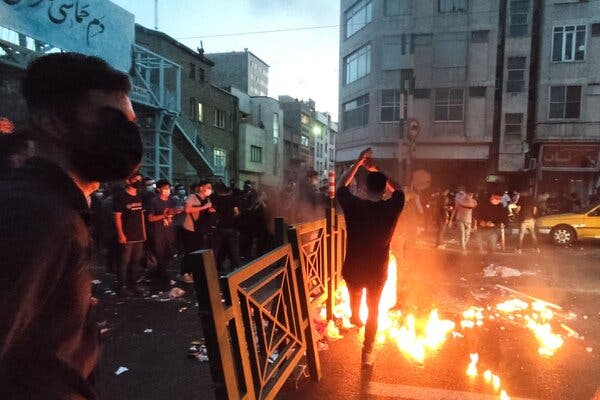
The Iranian government has vowed to "patiently listen" to the concerns of demonstrators, as protests sparked by the depreciation of the national currency and challenging economic conditions have expanded from Tehran to several other cities. Students took to the streets in the capital, while demonstrations were also reported at universities in Isfahan, Yazd, and Zanjan, according to the state news agency IRNA.
Protests have now persisted for three consecutive days across Iran, following the decision by vendors near two major technology and mobile phone centers near Jomhouri and the Grand Bazaar to close their businesses and join the protests. The rial has reached record low levels, driving up import prices and negatively impacting retailers. The rial has plummeted rapidly, with a current exchange rate of approximately 1.42 million rials to one US dollar, compared to 820,000 rials just a year ago.
The country’s economy, already strained by decades of Western sanctions, has faced renewed pressure after the reinstitution of international sanctions by the UN relating to Iran’s nuclear program.
Government's Response
A government spokesperson stated that authorities will listen to the protesters' concerns. “The government will listen patiently even if there are harsh voices, because we believe our people are sufficiently patient, and when they raise their voices, the pressure on them is elevated,” Fatemeh Mohajerani said at a press conference in Tehran. President Masoud Pezeshkian met with labor leaders on Tuesday to discuss proposals to tackle the economic crisis.
Public Trust Issues
Trita Parsi, executive vice president of the Quincy Institute for Responsible Statecraft, emphasized that the Iranian public lacks trust in the government’s ability to resolve economic issues. “The president himself recently admitted that he cannot do anything about these problems,” he stated. There is substantial concern that the protests could evolve into broader demands beyond economic issues.
Multiple Challenges
Iran's economic troubles are severe, characterized by an inflation rate of approximately 50% and currency depreciation. In addition to these issues, the country is facing a major energy crisis, with many of the reservoirs supplying Tehran and other large cities nearing depletion due to a severe water crisis. Furthermore, Iran is known for having one of the most restrictive internet environments in the world.
Iranian state agencies reporting on the protests emphasize that these demonstrations are motivated by the uncontrolled depreciation of the rial, rather than discontent with the theocratic regime that has ruled the country since 1979.