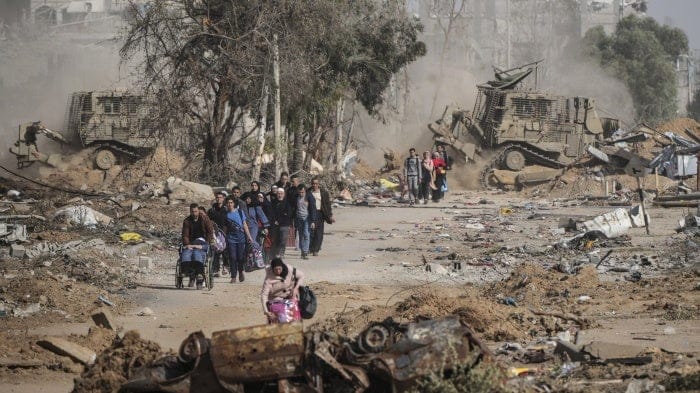
Gaza Faces Harsh Reality After Devastating Bombardments in Past Year
Gaza Confronts the Grim Reality of Total Destruction
Over the past year, Gaza's infrastructure has experienced a devastating reality. What once operated under stress has been pushed beyond the breaking point. Electricity networks, water systems, hospitals, roads, and municipal services have been destroyed or severely damaged, leaving daily life defined by survival. It is not uncommon for families to plan their days around the sound of a generator, if fuel is available. Parents and children queue for hours for a few liters of unsafe water or a loaf of bread.
Hospitals operate in semi-darkness, with doctors conducting life-saving interventions using mobile phones for lighting. Streets that once led children to school have been reduced to rubble. Life in Gaza has never been easy, even in moments when the outside world labeled it as "normal." For most people, life has been lived with a constant uncertainty.
Periods of electricity are rare and temporary, and each day is marked by fear. Gaza's infrastructure has long been fragile, with decades of blockades, repeated military attacks, and strict restrictions on construction materials leading to a situation where nothing has truly been repaired. One of the most visible losses has been electricity, with 80% of transmission capacity destroyed. Families feel this loss constantly: a mother charges her phone every time a neighbor's generator starts, knowing that it might be her only chance to contact her family.
Children do their homework by candlelight, if they manage to do it at all. Access to water has dramatically decreased, and Israeli bombardments have damaged wells and desalination stations. Without electricity or fuel, clean water cannot be extracted or distributed. When water trucks arrive, the water often has a salty or metallic taste, and many have no choice but to drink it, even though children fall ill with stomach infections.
Hospitals, which once operated at full capacity, are now in crisis mode, facing severe shortages of medicine, equipment, electricity, and staff. Destroyed roads and broken municipal infrastructure tear Gaza apart from within, leading to a grave situation where waste collection has nearly ceased, causing the outbreak of diseases. Telecommunications are frequently damaged, isolating families.
As the end of 2025 approaches, the entire infrastructure in Gaza no longer sustains a normal life; it barely supports survival. Talking about reconstruction does not merely mean rebuilding buildings, but also restoring the systems that allow people to live with dignity: safe water, reliable electricity, functional hospitals, and basic public services. Until then, civilians in Gaza continue to bear the consequences of another year that has shaken the foundations of everyday life.