In Turkey, your coffee comes with a side of destiny
Calling Turkish coffee “just a drink” doesn’t do it justice. In Turkey, it’s a centuries-old ceremony, a cultural dialogue and a symbol of hospitality — so significant that UNESCO listed it as an element of intangible cultural heritage. While Turkish coffee as we know it dates back almost 500 years, the oldest discovered coffee bean is from the 12th century.
The origins lie in Yemen, where Sufi mystics drank coffee to stay awake during late-night prayers. After Sultan Suleiman conquered Yemen in 1538, coffee spread rapidly through the Ottoman Empire, reaching Constantinople the following year. By the mid-16th century, Istanbul had its first coffeehouses, which quickly became hubs of social life.
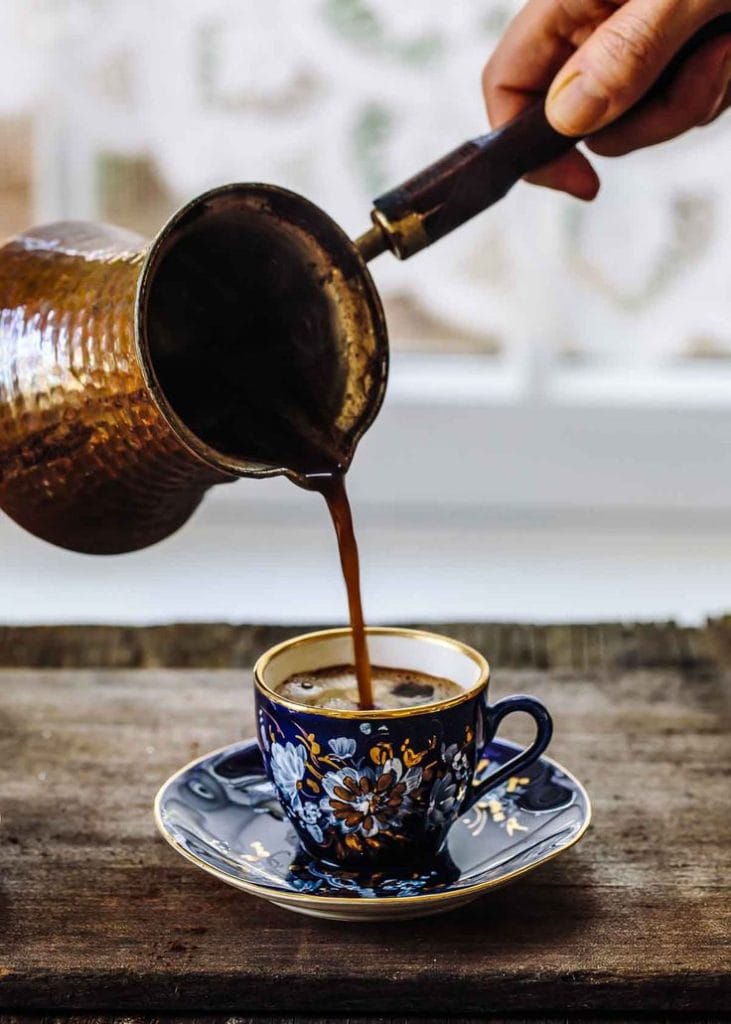
The cezve-ibrik brewing method — also used in Greece and rooted in Ethiopian tradition — is the defining element of Turkish coffee. The coffee isn’t filtered or brewed but slowly cooked in water, producing a thick, aromatic drink crowned with a layer of silky foam.
Coffeehouses, however, sparked controversy. Some Ottoman authorities feared they encouraged political dissent, and similar concerns emerged in Mecca and later in Europe, where even King Charles II tried to shut down London’s early coffeehouses.
Today in Turkey, inviting someone for coffee implies a personal connection. The preparation is deliberate: finely ground coffee is simmered in a cezve placed over hot sand or coals. It must be served hot, with foam intact, alongside water and Turkish delight.
Once finished, the ritual of coffee-cup reading begins. The cup is turned upside down and allowed to cool. The patterns in the remaining grounds are interpreted playfully — a fish for luck, a bird for travel. It’s less about fortune-telling and more about storytelling and connection.
Turkish coffee also plays a role in marriage customs. In a traditional courtship, the bride-to-be prepares coffee for the visiting groom’s family, adding plenty of salt to the groom’s cup. Drinking it without complaint is seen as a sign of character.
Turkish coffee culture later influenced Europe. London’s first coffeehouse was opened in 1652 by Pasqua Rosée, who learned the craft in Smyrna (modern İzmir). These “penny universities” became centers of debate and news.
Despite its deep heritage, Turkish coffee lacks the global branding of espresso. Some believe modernization is necessary, while others argue that its strength lies in its tradition. In cities like London and New York, enthusiasts host workshops, tastings and theatrical cup-reading sessions to introduce the ritual to new audiences.
In Istanbul, authentic Turkish coffee can be found at places such as Hafız Mustafa, Mandabatmaz and Nuri Toplar. For fortune readings, historic areas like Sultanahmet and Beyoğlu offer many venues — but locals say the best experience is sharing a cup with someone willing to read your coffee grounds and tell you a story.