2025: The Year of Full Maturity. How Moldovan Wine Transitioned from "Participant" to "Global Host"
The year 2025 will go down in the recent history of the Republic of Moldova not merely as an agricultural or economic milestone, but as a point of cultural and diplomatic inflection. It was a different year for Moldovan wine. Not necessarily easier—climatic and economic challenges persisted—but certainly the year the industry looked in the mirror and saw not a small Eastern European producer, but a mature player capable of shaping the global agenda. It was the year Moldova stopped being satisfied with simply attending the great conversations of the wine world and started hosting them with authority.
Wine Diplomacy: Chisinau, the World Capital of Oenology
The absolute highlight of the year was undoubtedly hosting the World Congress of the International Organisation of Vine and Wine (OIV). Having this event in Chisinau is the equivalent of hosting the "Olympics" for the wine sector. Over 500 top experts, policymakers, researchers, and journalists from 41 countries transformed Chisinau for several days into the nervous system of global viticulture.
The more than 300 scientific presentations were not just theory; they validated Moldova's potential to contribute global solutions regarding climate change adaptation, vineyard digitalization, and wine economics. The message was clear: Moldova has left the "exotic" periphery of the wine world and entered the decision-making core. We are no longer just a country producing good, affordable wine; we are a country generating expertise.
International validation continued with the hosting of the Sparkling Wine Session of the prestigious Concours Mondial de Bruxelles. This choice was no accident. It reflects the explosive growth in the quality of Moldovan sparkling wines, which are now being compared on equal footing with those from established regions like Champagne, Franciacorta, or Cava.
National Wine Day: From Festival to Cultural Phenomenon
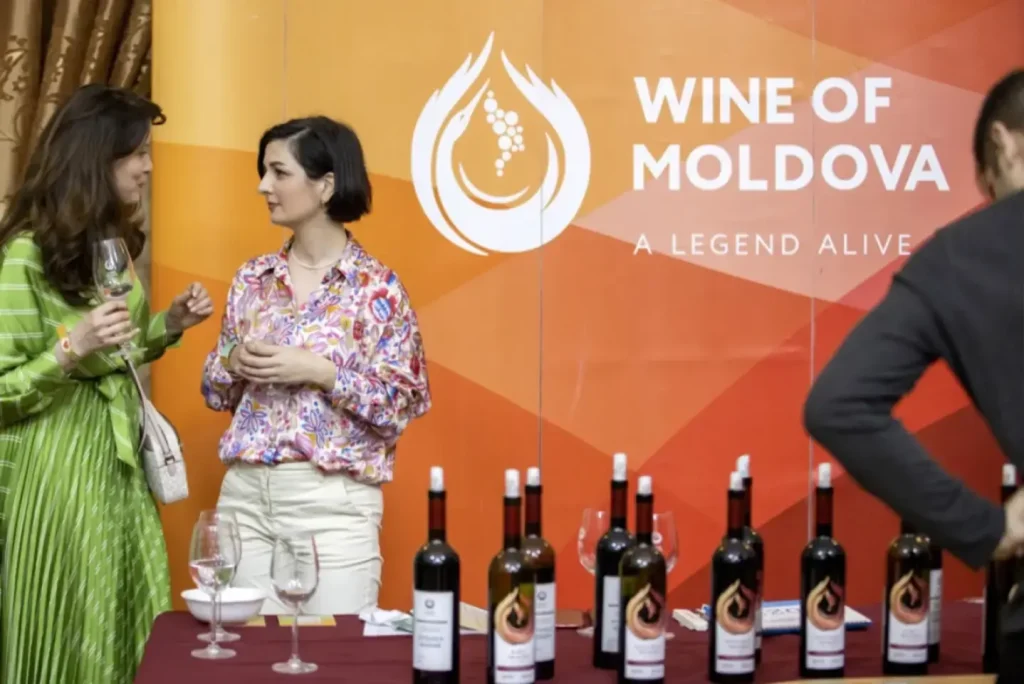
Domestically, National Wine Day 2025 set new records, but it wasn’t just the numbers that impressed—it was the paradigm shift. The over 100,000 visitors who filled the Great National Assembly Square found a changed atmosphere: less of a "barbecue festival" and more oenological education.
The fact that over 9,000 "Taster’s Carnets" were sold and nearly 85,000 official tastings were recorded (a 60% increase!) shows that the audience has become more sophisticated. Consumers are no longer drinking "just anything"; they want to understand the grape variety, the terroir, and the story behind the label.
Strategic Exports and the Return of Indigenous Varieties
Statistics for 2025 indicate a healthy stabilization. With over 110,000 hectares of vineyards and exports exceeding 140 million liters to more than 70 countries, Moldova remains a regional powerhouse. However, the great victory is structural: the share of bottled wines continues to grow at the expense of bulk wine. This means more added value remaining in the country and a much more solid country brand image.
Stylistically, 2025 was the year of reaffirming identity. Local varieties—Feteasca Alba, Feteasca Neagra, Rara Neagra, and Viorica—are no longer treated as marketing experiments. They have become the backbone of the Moldovan offer. International guides, such as the Fine Wine Guide, and critics from New York to Tokyo now recognize that Moldova's uniqueness lies in these varieties, not in copying international styles.
Challenges and Resilience
The year was not without difficulties. Drought and weather whims tested the nerves of viticulturists. Nevertheless, estimates show a production of 1.4 million hectoliters, an 18% increase compared to 2024. However, this figure hides a dual reality: the qualitative difference between irrigated/technologically managed vineyards and those farmed traditionally became glaringly obvious in the glass.
Conclusion and Effervescent Recommendations
Looking towards 2026, the direction is clear: more identity, sustainability, and premium quality. But to celebrate this historic year, nothing is more appropriate than a local sparkling wine, the sector that shone brightest in 2025. Here are three recommendations defining the excellence of the moment:
-
Domaine la Prut Brut Classic White – A textbook example of the traditional method. A blend of Fetească Regală (80%) and Riesling (20%) from the 2022 harvest, aged for 18 months in the bottle, offering complexity and elegance that rivals Western European sparkling wines.
-
Cuvee de Purcari Feteasca Alba – A statement of courage. One of the first sparkling wines made exclusively from Feteasca Alba using the traditional method. With 18 months of aging, it demonstrates that our flagship variety can offer finesse and structure.
-
Crama Mircești Blanc de Blancs – An artisanal sparkling wine, 100% Feteasca Alba. Aged for a minimum of 12 months, it impresses with fine bubbles and "crispy" freshness, with mineral and green apple notes specific to the Mircești terroir.
2025 was the year we finally convinced ourselves that Moldovan wine belongs at the big table.