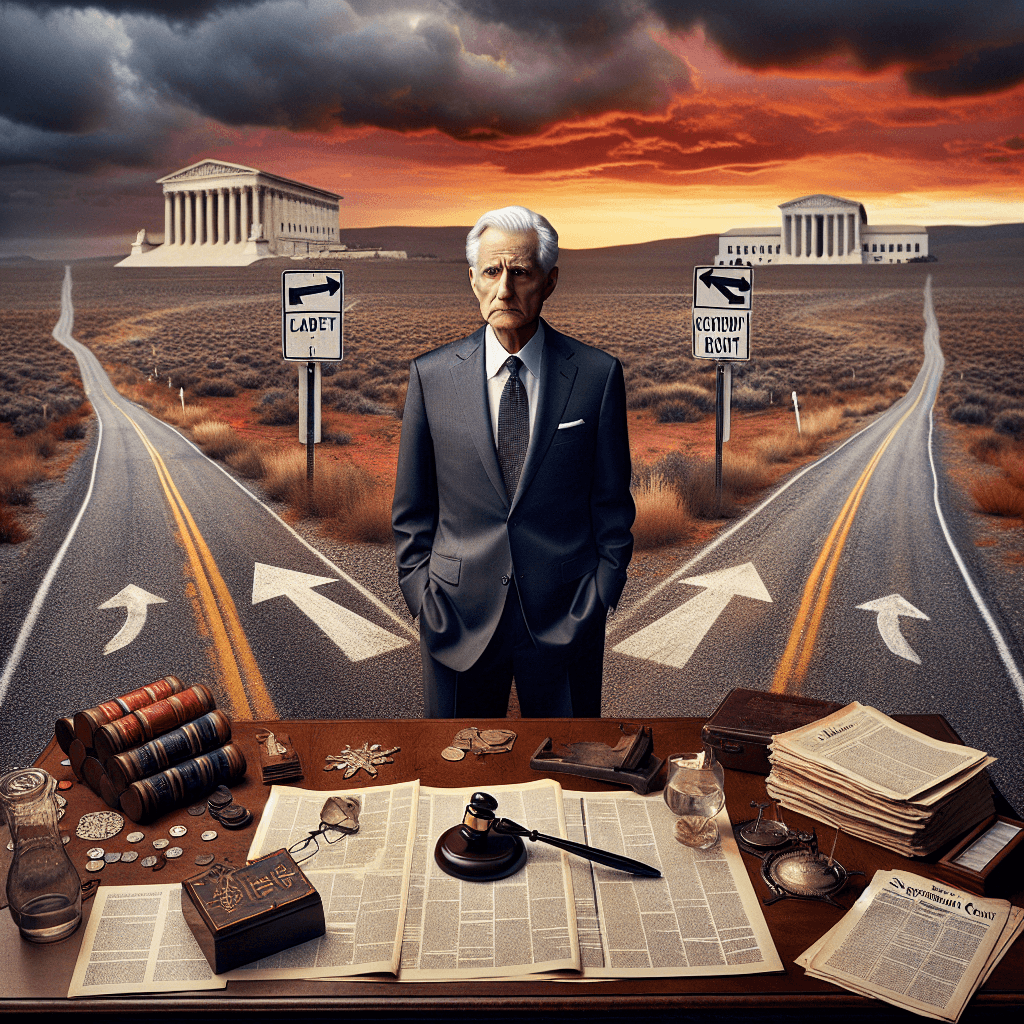
Supreme Court Decision: A Political Crossroads for Steve Bannon and Its Echoes
Legal Resonances in a Time of Crisis
The Supreme Court of the United States has issued a ruling that paves the way for the Department of Justice to drop the criminal case against Steve Bannon, a notable ally of former President Donald Trump. This legal accommodation emerges against the tense backdrop of American politics, where justice and politics increasingly interact, generating controversies and raising questions about the integrity of the judicial process.
The Controversial Path of Steve Bannon
Bannon, who served as senior advisor during Trump’s 2016 presidential campaign and as chief strategist in his first term, was convicted in 2022 for defying a congressional subpoena by refusing to provide documents or testify regarding the January 6, 2021 attack on the Capitol. It is essential to highlight that, despite his conviction and a four-month prison term, Bannon quickly rebounded, proclaiming himself a "political prisoner" and returning to his media community via the podcast "War Room." This comeback to the public sphere after a period of incarceration underscores his enduring influence in promoting right-wing populism and anti-immigration rhetoric, which characterized the Trump administration.
Dropping Charges Against Bannon: A Political Signal?
The Department of Justice’s request to dismiss the charges against Bannon is perceived not merely as a legal maneuver but as a significant political gesture. It reflects a broader trend of protecting Trump supporters in the context of his potential return to power. Bannon's attorney, Evan Corcoran, described the Supreme Court's decision as a validation of the doctrine that "politics and prosecution do not mix," a controversial notion deserving of examination from multiple perspectives.
The Ethical Dilemma: Questions Regarding the Fairness of the Judicial Process
The decision to drop the charges against Bannon raises questions concerning the fairness of the judicial process in the United States. The essential query is whether justice is truly an impartial entity or is swayed by political factors. This situation suggests a complex interplay between law and politics, where favoritism toward those in power can diminish public trust in the judicial system. Furthermore, it raises concerns about how such decisions may impact legal precedents and other cases that may arise in the future, especially concerning other Trump supporters facing similar criminal charges.
Impact on Political Rhetoric and Mobilization of Supporters
Bannon's return to the public spotlight and the potential disappearance of his criminal charges may have widespread effects on political rhetoric in the United States. As a symbolic figure of right-wing populism, Bannon continues to mobilize supporters. With each interview and episode of his podcast, he not only maintains his relevance but also contributes to reinforcing a specific political narrative—one that challenges traditional authority and emphasizes a deep-seated animosity towards the established system.
What Lies Ahead for Bannon and Trump?
Conversely, a logical question arises: what comes next for Bannon following this new legal chapter? With a potential conviction lifted, Bannon may extend his influence, solidifying his position among Trump supporters. However, the specter of future charges or backlash from other political actors remains a possibility. Similarly, for Trump, now re-emerging on the political scene, the ongoing backing of figures like Bannon could serve as a double-edged sword. Electoral mobilization will prove crucial not only for advancing his political agenda but also for sustaining a favorable climate for rehabilitating supporters under judicial scrutiny.
Creating a Dangerous Precedent
Dismissing criminal cases, particularly those involving prominent political figures, could establish a dangerous precedent wherein the politicization of justice becomes the norm rather than the exception. This could lead to a scenario in which future political leaders, regardless of affiliation, could leverage their power to evade accountability, thereby undermining the foundational principles of the rule of law. It is vital for society to remain vigilant against these trends and to defend the independence of the judicial system, which is a cornerstone of democracy.
The Enigma of Contemporary Politics and Its Implications
As American politics evolves, it remains essential to question not only the paths of Bannon and Trump but also the trajectory of our society as a whole. Rethinking the subject reveals a complex reality where political alliances reflect legal decisions and vice versa. What we are witnessing is not merely a personal struggle for escape but an episode in a dramatic unfolding where the politicization of justice risks becoming a standard operational method of the system. Who will rectify this chaos and restore the credibility of justice in the eyes of the public?
The Warhial Perspective
Looking at the Supreme Court's ruling and recent developments within American politics, it is evident that we find ourselves at a crossroads. This decision to drop the case against Bannon is not merely a legal maneuver; it indicates how politics and justice can interact, influencing the fabric of democracy. The Warhial perspective urges a careful and profound analysis of these events, which could shape not only Bannon's future but also the overall direction of politics in the United States for years to come.