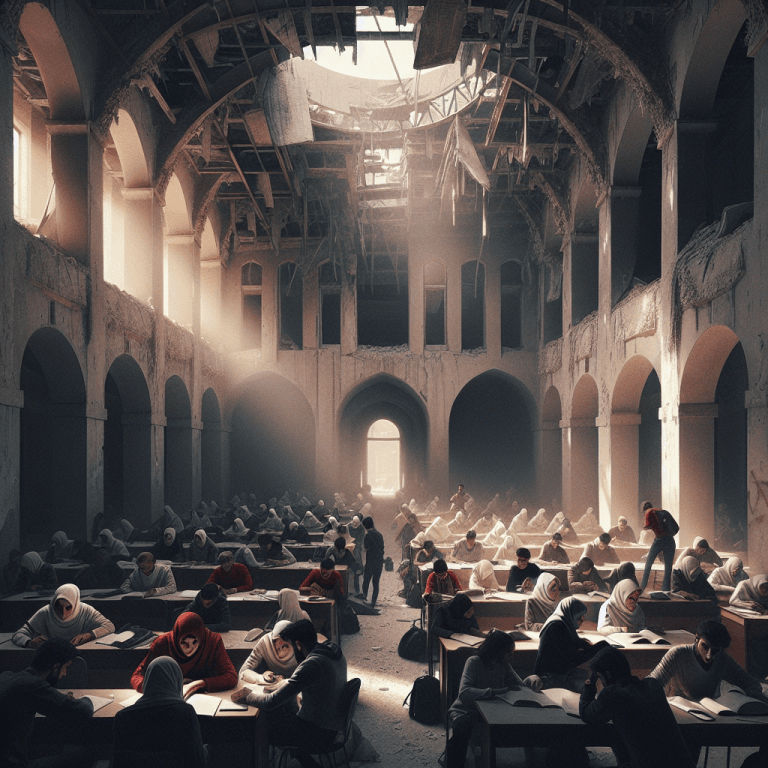
Shadows Over Sudan: The Devastating Attack on El-Daein Hospital and Humanity on the Brink
War and Humanitarian Crises
Sudan, a nation burdened by conflicts and instability, has once again faced a moment of profound tragedy with the bloody attack on El-Daein Hospital. Part of a civil war that erupted in April 2023, this tragic incident resulted in the deaths of 64 individuals, including children and medical personnel. With revelations that the army has been accused of conducting an airstrike on a vital medical facility, the pressing question resonates: how long will this conflict continue, and what consequences will it have for the Sudanese people?
An Assault on Humanity
The death toll and injuries resulting from the attack on El-Daein Hospital, a critical site for medical care in the region, underscore the brutality of a situation where humanity seems to have been utterly forsaken. The World Health Organization (WHO) has reported that the hospital has become unviable and unable to provide necessary medical care, leaving thousands without access to essential services during the Eid holiday. This serves as a painful reminder of how war affects not just those involved in the fighting, but also the innocent who rely on a fragile healthcare system.
Politics and the Warfare of Deception
Contradictory information regarding the responsibility for the attack adds to the general confusion and distrust in institutions that should protect civilians. The Sudanese army has denied accusations put forth by the Rapid Support Forces (RSF), who claim that a military helicopter was responsible for the attack. This blame-shifting is a common practice in conflict zones and creates a chaotic narrative from which only those who seek dominance and instability derive power. Unfortunately, misinformation acts as an effective weapon, deepening divisions and perpetuating violence.
The Conflict's Impact on Society
The civil war in Sudan has resulted in over 150,000 deaths and the displacement of approximately 12 million people, which the UN has labeled the largest humanitarian crisis in the world. These alarming statistics tell a story of a shattered nation, where the lack of access to water, food, medicine, and education has become the norm. It epitomizes human suffering, reflecting in every corner of Sudan.
Notable Appeals for Peace
Dr. Tedros Adhanom Ghebreyesus, the WHO Director-General, has repeatedly emphasized that peace is the best medicine. His call to halt the violence and protect civilians is crucial in a world that appears indifferent to the suffering of others. Unfortunately, this type of rhetoric is often met with apathy from those in power who have the ability to change the course of war. It is an ongoing battle between the fundamental rights of people and the political ambitions of merciless leaders.
El-Daein Hospital: A Symbol of Human Need
El-Daein Hospital is not merely a medical facility; it symbolizes the hope for survival for many Sudanese. Its destruction has had a devastating impact on the local community, which relied on that institution for emergency care. Unfortunately, such attacks on vital public health infrastructure are not unique within the context of conflicts in Sudan. These acts represent a blatant assault on human rights and international norms, a subject that should elicit a global response.
Looking Toward the Future: A Grim Landscape
With hundreds of thousands dead and millions displaced, Sudan's future appears bleak. What began as a power struggle between two rival factions, the Sudanese army and the RSF, has led to a systematic destruction of society. Amidst this turmoil, it is concerning to note that there are no concrete signs of progress in peace negotiations, and international efforts seem limited in the face of such an acute crisis. Many fear that Sudan has entered a spiral of violence that will be hard to halt without significant commitment from the international community.
Civil War and Moral Choices
Sudan stands at a crossroads, where the moral choices of its leaders and the international community will shape the nation's future. Political will and a genuine commitment to holding accountable those who commit atrocities are essential. At the same time, the protection of civilians and essential infrastructure should be a global priority.
International Response and Inaction
Although the UN and other international organizations have attempted to intervene, the outcomes often fail to make a significant impact on the ground. Criticism has been mounting regarding the ineffectiveness of international interventions, while the pain and suffering of Sudanese people continue unabated. The avoidance of accountability and the superficiality of international reactions cultivate a climate of impunity, only encouraging the continuation of violence.
The Warhial Perspective
In conclusion, the attack on El-Daein Hospital serves as a brutal manifestation of human suffering in Sudan, as well as a clarion call for action from the international community. The medical infrastructure, a symbol of hope, was devastated on a day meant for celebration, and the injustice of this fact cries out for answers. It is vital for international actors not to remain indifferent to the atrocities in Sudan and to develop effective strategies to support the restoration of peace. With so many people caught in the vortex of this devastating war, it remains to be seen whether humanity can find the resources necessary to offer a sustainable solution and prevent the recurrence of such tragedies in the future.