Davos’s “Board of Peace”: A High‑Profilee Test of the International Order
A spectacle in Davos: signatures and a parallel agenda
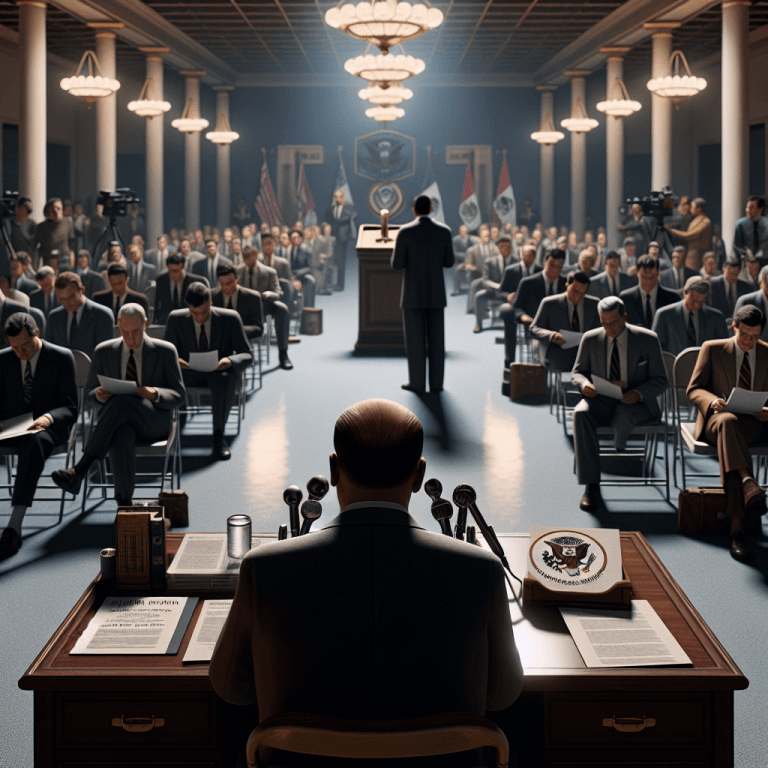
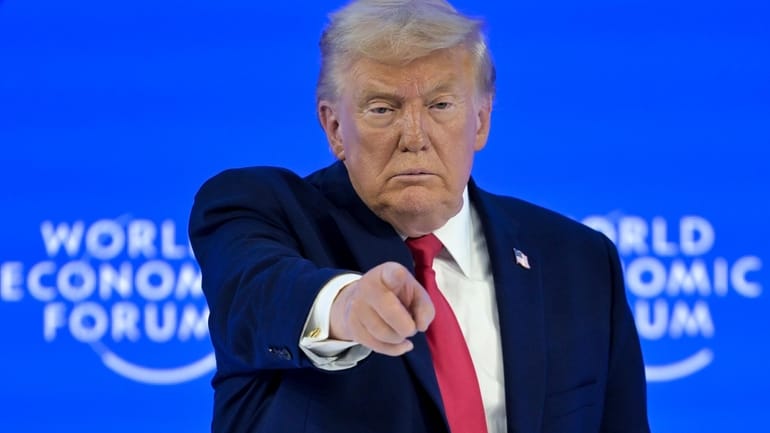
At the World Economic Forum in Davos, the usual backdrop of discreet leader‑to‑leader meetings was supplanted by a ceremonious launch: U.S. President Donald Trump hosted the signing of a so‑called "Board of Peace Charter" — presented as an alternative mechanism for mediation and stabilization. Marketed as a novelty, the event drew signatures from a number of world figures and elicited mixed reactions across the globe. Beyond the glossy official photographs, the central question remains: what precisely is this "Board of Peace" and what institutional shifts might it precipitate?
Why Davos? Platform logic and symbolic intent
Davos is more than a marketplace of economic ideas; it is an ideal stage for rolling out projects that seek a global profile. Launching an initiative there communicates two messages: media legitimacy and access to economic and political elites. For a leader focused on image and the cultivation of an international brand, the ceremony resembles a geopolitical public‑relations campaign. Yet applause from the plenary does not automatically translate into legal recognition or institutional acceptance by established multilateral bodies.
The anatomy of an unclear "charter": instrument, alliance or spectacle?
The term "charter" typically evokes documents with normative force or serious collective commitments. In the absence of a publicly available, detailed text and a clear roster of members and competencies, two possibilities remain: either this is a voluntary consultative framework or it aspires to become an institutional actor. Key questions include the definition of mandate, decision‑making procedures, funding arrangements, transparency and the means of implementing recommendations. Without clarification, the initiative risks remaining largely symbolic rather than operationally effective.
Legitimacy versus efficiency: the perennial dilemma for alternatives to multilateralism
Two objectives coexist and often clash: improving efficiency in conflict resolution and preserving international legitimacy. Actors frustrated by the United Nations’ slow processes or regional body gridlocks may view a compact, decisive "Board" as a pragmatic solution — a small group capable of rapid intervention. But efficiency achieved outside democratic rules and independent oversight can easily devolve into realpolitik, undermining universal norms. Legitimacy flows from broad recognition and respect for international law; without it, short‑term gains can become long‑term liabilities.
Global reactions: from cautious calculation to outright opposition
Descriptions of the initiative as "controversial" and reports of "mixed reactions" point to a wide spectrum of responses. Traditional U.S. partners may opt for pragmatic cooperation, especially if the project focuses on technical mediation and humanitarian assistance. The European Union and civil society organizations are likely to demand transparency, rule‑based standards and safeguards against abuse. Authoritarian states or strategic rivals — for example, Russia and China — can portray the effort as an attempt to construct a parallel architecture designed to erode their influence or to sidestep international law. Small states and those directly affected by conflict will remain skeptical until the tools offered and resources committed demonstrate real viability.
"The initiative has drawn mixed reactions from world leaders."
Risks of a personalised ‘Board’: instrumentalisation and conflicts of interest
The name "Board of Peace" and the private‑style launch raise the prospect of turning peace management into a domain of political and financial influence. When actors with economic or geopolitical stakes assume the role of arbiter, proposed solutions may prioritize stabilization that serves investments or political agendas rather than the rights and needs of affected populations. The absence of external oversight and accountability mechanisms amplifies the risk of opaque decisions and of conflict dynamics being reshaped under the guise of "pragmatic negotiations."
What the real world will demand: capacity, neutrality and sustainability
To overcome skepticism, any initiative of this type must convincingly demonstrate three attributes. First, operational capacity: professional teams, clearly delimited mandates and meaningful logistical resources. Second, verifiable neutrality: anti‑corruption rules, transparent selection procedures for mediators and independent audit mechanisms. Third, sustainability: long‑term plans for reconciliation, reconstruction and meaningful engagement with civil society. Absent these elements, the "Board of Peace" risks remaining a diplomatic statement rather than a credible field actor.
Possible scenarios: from complementarity to the erosion of multilateral order
Four plausible trajectories present themselves in the near term. One: the project settles into a complementary role, working alongside the UN and regional bodies and providing technical expertise on peripheral cases. Two: it emerges as a competitive actor, attracting states and funding but delivering limited results and contributing to diplomatic polarization. Three: it collapses due to resource shortfalls and political pushback, becoming primarily a public‑relations initiative. Four — the most worrying: the model proliferates, fragmenting the international architecture and enabling temporary coalitions to set norms selectively and arbitrarily.
Practical considerations for Romanian and European decision‑makers
For countries such as Romania, deciding whether to join or cooperate with this Board requires weighing reputational costs against diplomatic benefits. Participation could grant access to rapid decision channels in regional crises but could also associate a country with initiatives perceived as bypassing multilateral processes. European partners will likely demand clarifications before endorsing involvement; Brussels will monitor whether the initiative adheres to EU norms on fundamental rights and transparency standards.
Final reflections: a signal about the state of the global order
The signing of a "Board of Peace Charter" in Davos is not merely an isolated act of geopolitical PR. It signals frustration with existing architectures and a desire among some actors for more agile instruments. Yet any such innovation must pass tests of public accountability and compatibility with international law; otherwise the touted "efficiency" risks being a veneer for selective interest‑driven interventions.
The Warhial Perspective
President Trump’s initiative has the potential to reconfigure how public actors address conflicts — but it carries an equal potential to weaken the principles underpinning the post‑war international order. At present, the "Board of Peace" reads more like a personalized foreign‑policy instrument than a normative mechanism. In the absence of transparency, independent controls and genuine inclusion of affected states, there is a real danger that such platforms will normalize externally imposed, selective solutions dependent on power rather than justice.
Warhial’s forecast: over the next 12–24 months we should expect two concurrent dynamics. First, iterations of this model will be replicated in key regions as actors seek faster, more controllable tools for crisis management. Second, there will be a surge of regulatory responses from the United Nations and the European Union designed to reaffirm standards. The true stake is not only the operational efficiency of interventions but the question of who defines the norms of peace: transient coalitions led by dominant powers, or an open architecture subject to public oversight and the supremacy of international law.