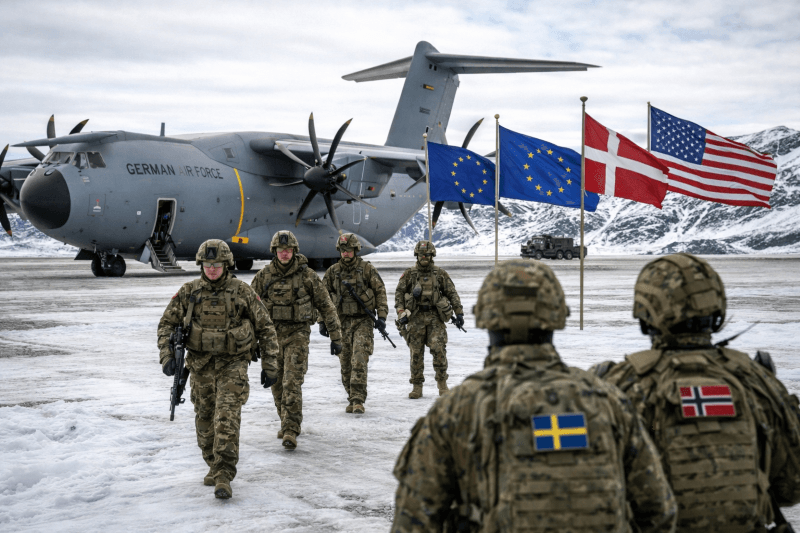
Army on Minnesota Streets? Arctic Troop Readiness Exposes a Democracy Under Strain
Troop readiness amid urban unrest
The Pentagon ordered approximately 1,500 active‑duty soldiers from Alaska to be placed on alert for a potential mission to Minnesota amid large protests that followed a major ICE operation. Two infantry battalions from the 11th Airborne Division, trained for Arctic conditions, received "prepare‑to‑deploy" orders for the Minneapolis–Saint Paul area. Reported on 19 January 2026, the directive has reignited a longstanding debate over the proper role of federal armed forces in responding to domestic disturbances and the scope of executive authority when confronted with widespread civic dissent.
Roots of the unrest: federal operations colliding with local communities
The ICE operation that triggered the protests mobilized nearly 3,000 federal agents and was framed as a response to local migration pressures and allegations of violence tied to organized immigrant networks. ICE reported more than 2,500 arrests, but the operation was accompanied by disturbing imagery: tear gas deployed in residential neighborhoods, children and infants taken to hospital after exposure, and at least one death while in agency custody. Many residents and activists characterized the intervention as a federal occupation, and the mayor of Minneapolis publicly condemned the tactics as constitutionally suspect and intimidatory.
An Arctic contingent in a snowbound city: symbolism and logistics
Deploying Arctic‑trained battalions to an urban theater carries unavoidable symbolism. These units are prepared for extreme environmental operations; placing them on the streets of a Midwestern city highlights a disconnect between their training and potential mission sets. From a logistical perspective, their presence could bolster protection of federal facilities, provide critical logistics or medical support, and assist with large‑scale coordination. Yet any active role in crowd control or law enforcement raises immediate legal questions—chief among them the constraints of the Posse Comitatus Act and the exceptional authority granted by the Insurrection Act, which has surfaced rhetorically in recent days from senior officials.
The legal ecosystem: Posse Comitatus, the Insurrection Act and executive discretion
Posse Comitatus has long stood as a statutory and normative barrier to the use of the U.S. military in ordinary law enforcement tasks. The Insurrection Act, a narrowly used exception, allows the president to employ federal forces in domestic disturbances under specific circumstances. Recent public statements by the president suggesting he might invoke the Insurrection Act—calling it "very powerful" before seeming to temper that stance—have heightened public anxiety. Invocation of the Act would rapidly convert what began as administrative and law‑enforcement disputes into a constitutional crisis, increasing the risk of escalation and further eroding public trust in democratic institutions.
"If I need to, I will use it. It is very powerful."
On the ground: protests, casualties and allegations of abuse
Visual accounts from Minneapolis portray largely peaceful demonstrations, according to local authorities and many participants, yet confrontations with federal agents have produced injuries and alarming incidents. Questions about detention conditions emerged after the death of Victor Manuel Diaz in ICE custody two weeks after his arrest, a case that signals deeper structural problems extending beyond a single operation. Reports of mass deportations, transfers to maximum‑security prisons abroad, and other harsh practices in recent years compound community anxieties about federal actors' ability and willingness to uphold fundamental rights.
Social impact and community wounds
The federal mobilization has deepened local divisions: civic leaders have labeled the response an invasion, while affected communities see a criminalization of migration intertwined with race, poverty and the geopolitics of movement. The visible presence of agents on residential streets, the deployment of tear gas in neighborhoods and the public humiliation of detainees have damaged citizen–state relations in ways that are difficult to repair. Even the State National Guard’s readiness posture—though it has not been activated on the streets—serves as both political pressure and a preparation for potential escalation.
Domestic politics and electoral stakes
The Minneapolis confrontations risk becoming a potent electoral issue. Federal force, "zero tolerance" promises and securitized rhetoric can energize broad swaths of the electorate while exposing the administration to significant backlash. For political opponents and municipal leaders, these events present opportunities to critique legal and moral failings. In the runup to 2026 elections, such crises will likely shape not only local voter sentiment but also national perceptions of executive limits and the health of democratic checks and balances.
Strategic risk: normalizing militarized responses
Beyond Minnesota, a dangerous precedent looms: the increasing likelihood that the military will be threatened or used for domestic missions. Even if troops remain on alert rather than on the streets, the normalization of military presence in civil contexts imposes long‑term costs on democratic governance. Soldiers trained for combat and environmental survival may be pressed into roles that blur the line between military operations and civilian policing, potentially undermining legal institutions and civic norms. Democracies must balance security and civil liberties; choices made now will define where that balance rests for years to come.
Possible trajectories: measured restraint to full invocation
There are several plausible paths forward. One: the troops remain on alert but are not deployed, their posture intended to deter the spread of violence. Two: federal forces are used in a narrowly tailored way to protect infrastructure and personnel, echoing precedents such as the limited federal role seen in Los Angeles in 2023. Three: the administration invokes the Insurrection Act for a broader intervention, a move that would trigger constitutional litigation and nationwide protest. Each option carries distinct legal, social and political consequences; the executive’s choice will signal whether priority is given to immediate order or to the protection of civil‑liberties norms.
The Warhial Perspective
Warhial interprets the arming‑up of Arctic units bound for Minnesota as more than an operational contingency; it is a stress test for American institutional resilience. The administration faces the persistent temptation to treat civic crises as security problems solvable by force. Historical lessons, however, suggest that militarized solutions tend to widen social fissures rather than close them. An explicit or implicit recourse to the Insurrection Act would not only provoke legal battles but also accelerate the delegitimization of federal forces among vulnerable communities.
Warhial’s projection is cautious: in the weeks ahead, troops are likely to remain in a heightened state of readiness while the administration opts for rhetorical de‑escalation and hybrid measures—combining intensified law enforcement with calls for calm. Yet if violent incidents continue or deaths in custody persist, the probability of broader federal involvement will rise. The long‑term consequence will be more moral than tactical: a measurable decline in public confidence toward state instruments and an intensification of domestic politics where security imperatives increasingly overshadow civil‑rights protections. Ultimately, community responses and cross‑sector solidarity will determine whether this episode becomes a damaging precedent or a remediable aberration.