Understanding the Implications of Recent Economic Sanctions on Global Trade Dynamics and Relations
Context & Background
The landscape of international trade has long been influenced by political tensions, with sanctions emerging as a tool of statecraft since the early 20th century. Historically, economic sanctions have been employed by nations to exert pressure on governments or regimes that violate international laws or human rights. The United Nations, alongside regional organizations, has often stepped in to impose sanctions against countries deemed a threat to global peace and security. Over recent decades, the context in which these sanctions are applied has evolved significantly, often driven by geopolitical interests and alliances. Notably, the post-Cold War era saw a marked increase in sanctions against nations like Iraq, Iran, and North Korea, reflecting a shift towards using economic isolation as a means to enforce compliance with international norms. The implications of these sanctions extend beyond immediate trade disruptions; they can lead to a reconfiguration of global alliances, foster or exacerbate economic disparities, and prompt nations to seek alternative trade partnerships.
Incident Details
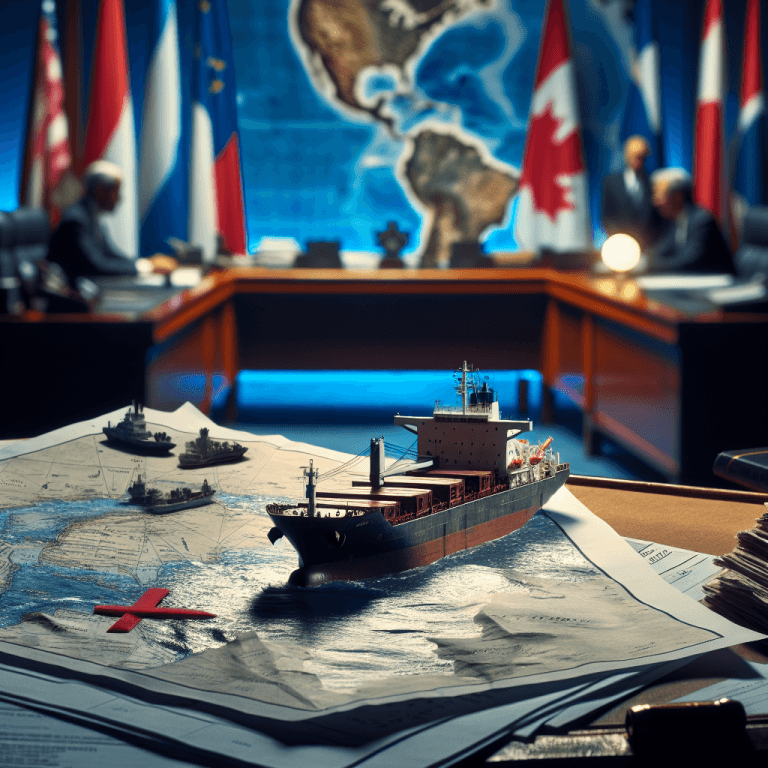
The recent imposition of certain economic sanctions has sent ripples through the global trade network, impacting markets, supply chains, and diplomatic relations. Specifically, these sanctions target major sectors such as energy, finance, and technology of a nation deemed to be engaging in activities contrary to international norms. For instance, restrictions on oil exports can lead to immediate spikes in global energy prices, which in turn affect transportation and manufacturing costs worldwide. Furthermore, the financial sanctions may restrict access to the international banking system, isolating the targeted nation from global commerce. The immediate fallout is often characterized by significant currency devaluation and increased inflation in the sanctioned country, leading to social unrest and economic hardship for ordinary citizens. As countries scramble to adjust to the new economic realities, we often witness a shift towards informal trade networks and barter systems, as traditional trade routes become increasingly unreliable or infringing upon the imposed sanctions.
Official Reactions
Impact & Future Outlook
The long-term consequences of these economic sanctions are complex and multifaceted. Economically, the sanctions can drive nations towards greater self-reliance, which may, paradoxically, encourage domestic innovation as countries seek to develop local industries that can withstand international pressure. On the flip side, prolonged sanctions often deepen economic fractures, making recovery increasingly difficult and heightening reliance on informal markets. Politically, the sanctions can galvanize opposition sentiments within the sanctioned nation, creating opportunities for regime change or instability. In terms of global trade dynamics, as countries either defy or adapt to these restrictions, alternative trade routes and partnerships could emerge, potentially leading to a redefinition of global economic alliances. Analysts predict a future where regional blocs could become increasingly significant, as nations seek to minimize dependence on traditional trade powers. In conclusion, the evolving landscape of economic sanctions not only shapes immediate market responses but also sets the stage for long-term geopolitical realignment that could redefine the very fabric of international relations and trade.