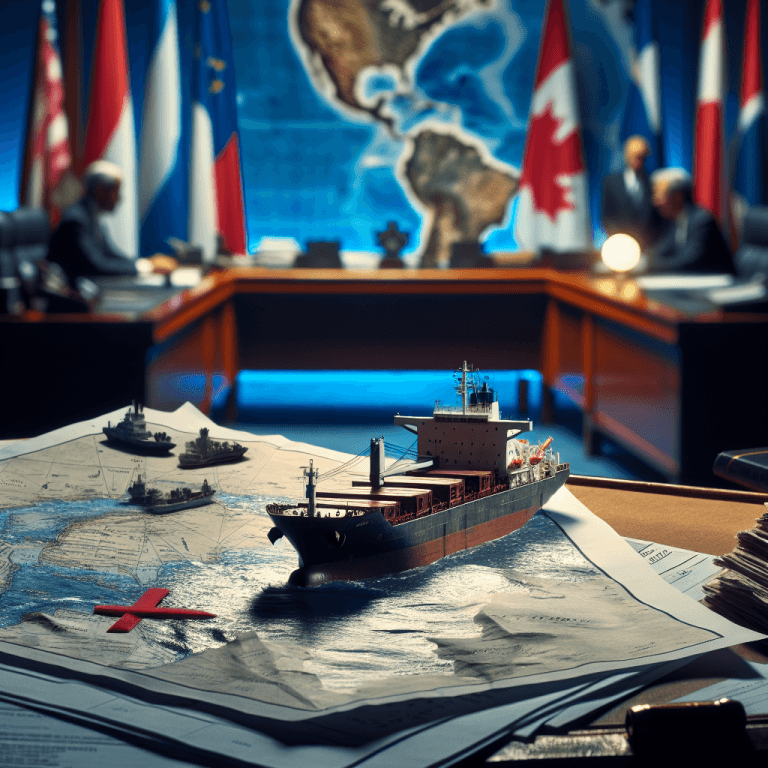
Exploring the Far-Reaching Implications of Recent Developments in Global Trade Policies and Their Effects on Economies Worldwide
Context & Background
Global trade has been a cornerstone of international economic relations since the dawn of civilization, functioning as a vital engine for economic growth and development. The evolution of trade policies can be traced back centuries, from the mercantilist practices of the 16th to 18th centuries that emphasized state control over commerce, to the liberal trade policies emerging post-World War II, which encouraged free trade and economic cooperation. Institutions like the World Trade Organization (WTO) were established to streamline trade relations, reduce tariffs, and mediate disputes among nations. However, as economic powerhouses like China and India have emerged, the balance of trade has shifted, leading to a more complex interplay of negotiations and policies. In recent years, trade wars, particularly those initiated by the United States against major trading partners, have led to tariffs and counter-tariffs, creating a ripple effect that has not only impacted raw material prices but also fostered uncertainty among manufacturers and consumers alike. Furthermore, the COVID-19 pandemic added another layer, exposing vulnerabilities in supply chains and prompting countries to reconsider their trade dependencies.
Incident Details
The latest upheaval in global trade policies was triggered by a series of announcements from the United States, aimed predominantly at reducing its trade deficit and protecting domestic industries. Officials hinted at renewed tariffs on steel and aluminum imports from critical allies such as Canada and the European Union, a move reminiscent of the aggressive tariff policies of recent years. This has fueled fears of a potential trade escalation, threatening not only industry-specific sectors but also the delicate fabric of international relations. In an environment already fraught with volatility, various sectors, including agriculture and technology, are bracing for the worst. Farmers fear retaliatory tariffs on crops like soybeans, while tech companies worry about increased costs for essential components manufactured abroad. Interviews conducted with stakeholders reveal a palpable sense of anxiety; many businesses depend heavily on smooth cross-border trade to maintain competitiveness. This situation is exacerbated by the unpredictability of compliance with these new policies, raising questions about how companies can adapt without incurring significant losses or alienating international partners.
Official Reactions
The reactions to the new trade policy announcements have been swift and varied. Industry leaders from both manufacturing and agriculture sectors have openly expressed their concerns, warning that such measures could result in job losses and increased prices for consumers. The Canadian government issued a formal statement urging a return to collaborative dialogue, emphasizing the importance of mutual trade interests. Additionally, EU representatives have convened emergency meetings to formulate a coordinated response. Economists have cautioned that these policies, if not carefully navigated, could instigate a broader trade war, thereby alienating key allies and disrupting decades of cooperative economic practices. Various trade associations are rallying to challenge these measures, discussing potential legal avenues to counteract what they term "unilateral trade aggression."
Impact & Future Outlook
The short- and long-term consequences of this trade policy shift remain to be fully understood, but initial assessments suggest a turbulent road ahead. In the short term, supply chains may experience disruptions as companies scramble to adapt to new regulatory environments, potentially leading to increased consumer prices. Mid-term projections indicate that sectors reliant on exports could see diminished market share, especially if retaliatory measures escalate further. In the long run, if the geopolitical landscape continues to shift towards protectionism, we could witness a fragmentation of the global economy, where nations increasingly prioritize self-sufficiency over interdependence. This would effectively dismantle decades of progress towards globalization, potentially leading to increased costs for consumers and reduced economic growth. Economists project that a prolonged trade conflict could suppress global GDP growth by as much as 1-2% annually, with emerging markets enduring the most significant impacts. This uncertainty emphasizes the need for multilateral trade agreements that could circumvent the pitfalls associated with protectionist policies, advocating for an approach that promotes innovation and competitiveness rather than insular economic strategies.