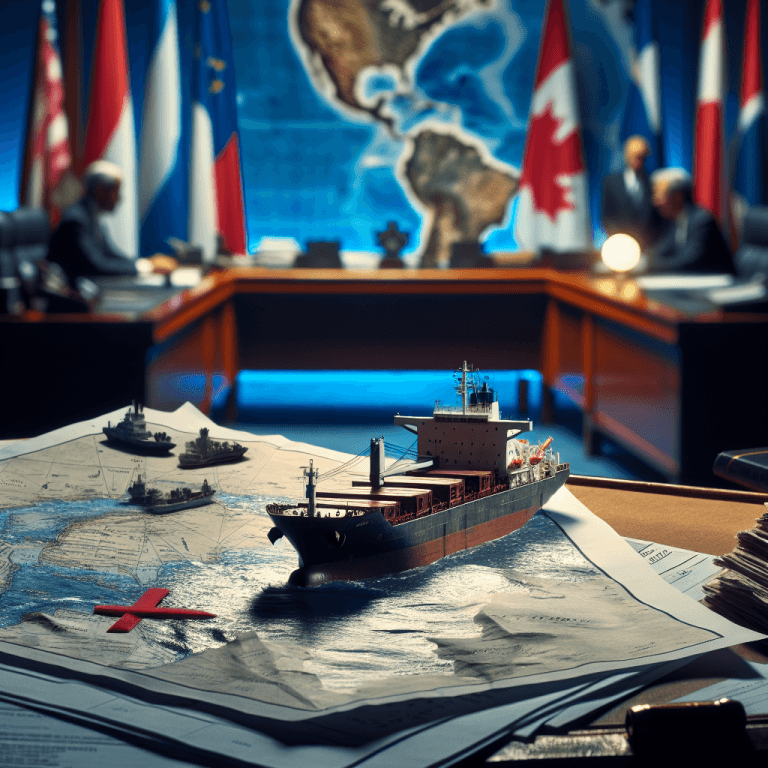
Evolving Challenges in Global Trade: Navigating Economic Uncertainty Amid Political Strife
Context & Background
The world of international trade is often a barometer for the health of global economies, marked by a complex interplay of historical, political, and economic factors. Following the end of World War II, the establishment of institutions such as the International Monetary Fund (IMF) and the World Bank set the stage for a post-war economic boom characterized by the reduction of trade barriers and the promotion of free trade. However, the evolution of trade practices and policies has been influenced by waves of nationalism, economic protectionism, and geopolitical conflicts, particularly in the 21st century. Throughout the late 20th and early 21st centuries, the rise of countries such as China and India as economic powerhouses reshaped global trade dynamics. The advent of technology has also led to rapid changes in industries, creating both opportunities and disruptions. The Financial Crisis of 2008, followed by the COVID-19 pandemic, illustrated how fragile these interconnected systems could be, revealing vulnerabilities that could not have been anticipated. As nations grapple with economic recovery and the ramifications of ongoing conflicts, particularly in Eastern Europe and the Asia-Pacific region, the challenges facing global trade continue to evolve.
Incident Details
Recent developments in trade relations have brought to light a significant incident impacting multiple countries and their economies. As nations implement sanctions and tariffs in response to geopolitical tensions, the supply chains that have long undergirded international commerce face unprecedented disruptions. Transportation costs have surged due to rising fuel prices, compounded by port congestion and a shortage of shipping containers. These challenges have not only caused delays but also exacerbated inflationary pressures around the globe, leading to increased consumer prices. Furthermore, the fallout from the ongoing conflict in Ukraine has affected energy supplies and agricultural exports, particularly grain, creating further strain on economies that rely heavily on imported goods. Countries in Africa and parts of the Middle East are feeling these impacts acutely, as access to staple foods becomes increasingly constrained, driving a larger crisis of food security. Moreover, retaliatory measures between major economic powers, such as the United States and China, continue to threaten established trade frameworks, raising fears of an economic decoupling that could reshape global markets for years to come.
Official Reactions
Impact & Future Outlook
The long-term consequences of these recent trade tensions could fundamentally alter the landscape of global commerce. Analysts are projecting that countries may increasingly seek to shorten supply chains through a practice known as 'reshoring,' where manufacturing is moved closer to consumer markets. This adjustment could lead to significant shifts in industrial policies and require nations to invest in domestic capabilities, potentially resulting in job creation but at the cost of higher consumer prices due to reduced economies of scale. Additionally, changes in consumer behaviors, with growing support for local products over imported ones, may further influence trade routes. As trade agreements become more targeted and protective, industries that relied on open markets will need to adapt or risk obsolescence. Overall, as nations navigate these turbulent waters, the interplay of politics, economics, and public welfare will shape not only the immediate recovery efforts but also the future framework of global trade, making the coming years critical for policymakers and businesses alike.