Total War on Fentanyl: Donald Trump Designates the Opioid a "Weapon of Mass Destruction" and Militarizes the Drug War, While Proposing Marijuana Reform
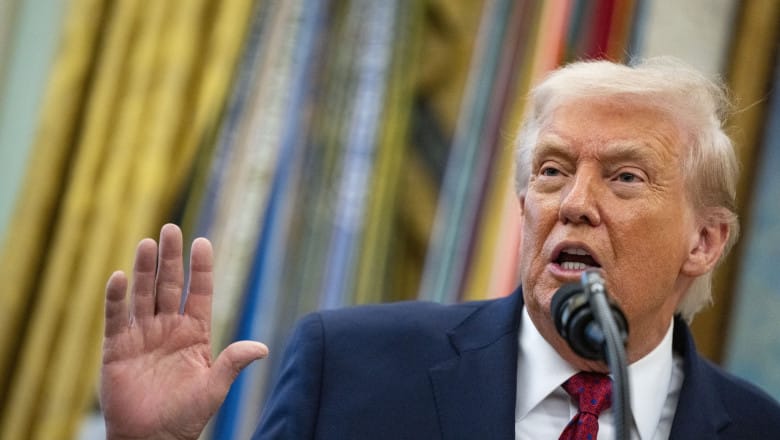
In an unprecedented move that redefines United States security policy, President Donald Trump signed an executive order in the Oval Office on Monday, officially classifying fentanyl as a "weapon of mass destruction" (WMD). The decision marks a dramatic escalation in the war on drugs, transforming a public health crisis into a top-tier national security issue with vast military and geopolitical implications.
From Health Crisis to Existential Threat
"By the executive order I am signing today, we are officially classifying fentanyl as a weapon of mass destruction, which is what it truly is," declared the White House leader, flanked by defense and security officials. The President's rhetoric was apocalyptic, comparing the effects of this synthetic opioid to those of a conventional military attack. "No bomb does what this drug does. 200,000 to 300,000 people die every year," Trump claimed, using figures that, while shocking, are disputed by official statistics.
According to data from the Centers for Disease Control and Prevention (CDC), the reality, though tragic, differs from the President's estimates. In 2024, the United States recorded 80,391 overdose deaths, of which approximately 48,000 were directly attributed to synthetic opioids like fentanyl. However, the White House insists that the substance's lethal potential and the ease with which it can be weaponized justify the new label. The executive order states that fentanyl "appears more like a chemical weapon than a narcotic," warning that criminal networks use it to "fuel anarchy" and undermine US sovereignty.
Militarization of the Conflict and Foreign Targets: Mexico and Venezuela
The new legal designation provides the Trump administration with additional leverage, allowing the involvement of the Department of Defense and intelligence agencies in operations that were previously the exclusive domain of law enforcement and the DEA. This doctrinal shift complements the designation of Mexican cartels as "foreign terrorist organizations," a measure adopted in February 2025.
The United States has intensified pressure not only on Mexico but also on Venezuela. The Trump administration directly accuses socialist leader Nicolas Maduro of coordinating a "narco-state," despite international experts arguing that Venezuela is neither a primary source of fentanyl nor the main transit route for drugs reaching the US. Nevertheless, Washington has deployed an impressive naval and aerial force in the Caribbean Sea and the Eastern Pacific. US warships are now intercepting suspicious vessels, applying tactics similar to those used in active combat zones, under the pretext of stopping the flow of cocaine and chemical precursors.
Caracas has reacted virulently, denying the accusations and claiming that the "war on drugs" is merely a pretext for regime change and for seizing control of Venezuela's immense oil reserves, a country under strict embargo since 2019.
The Marijuana Paradox: An Iron Fist and an Olive Branch
While fentanyl is being treated as a chemical weapon, Donald Trump surprised the audience by announcing a potential historic relaxation of federal marijuana laws. The President stated that his government is "considering" rescheduling cannabis as a less dangerous drug (moving it from Schedule I to Schedule III).
"Many people want this rescheduling," Trump admitted, adopting a pragmatic tone. "It allows for huge amounts of medical research that cannot be done under the current legislative framework."
This duality—the "hammer" for opioids and the "velvet glove" for marijuana—reflects a complex political strategy: satisfying the conservative base with tough border security measures while simultaneously appealing to younger or libertarian voters through the relaxation of cannabis regulations.
In conclusion, 2025 brings a total militarization of US drug policy. By equating traffickers with terrorists and drugs with weapons of mass destruction, Donald Trump has blurred the line between law enforcement and military operations, opening a tense new chapter in inter-American relations.