Securing the Eastern Flank and Backing Ukraine: Nicușor Dan Draws Red Lines in Helsinki and London
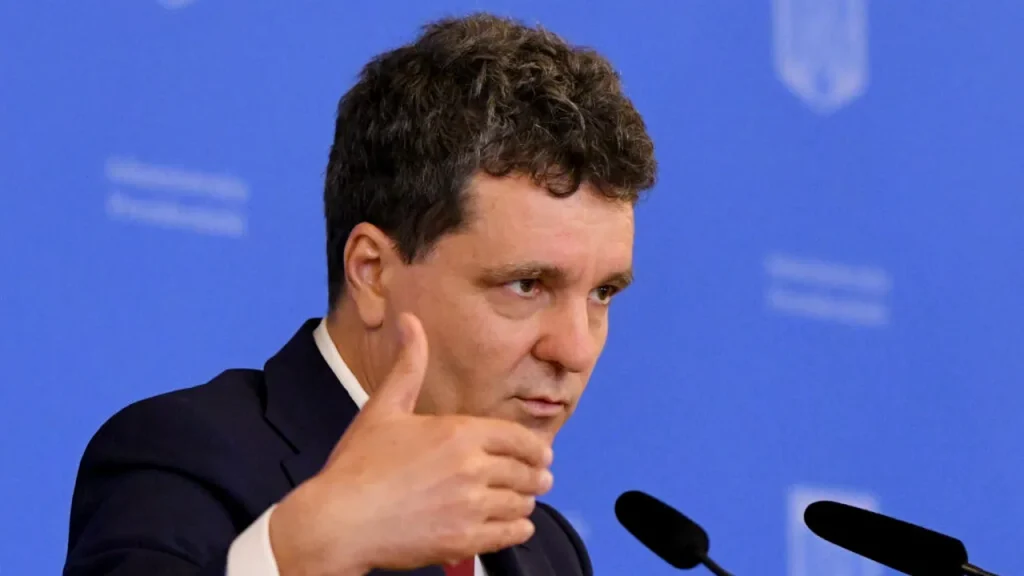
In a highly volatile geopolitical context, marked by continued Russian aggression and uncertainty regarding the future of European security architecture, President Nicușor Dan embarked on a crucial diplomatic tour on Tuesday. The Head of State's agenda includes strategic stops in Helsinki, London, and Brussels, with the central objective of concretely operationalizing defense on the EU and NATO Eastern Flank, as well as strengthening Ukraine's negotiating position vis-à-vis Moscow.
Operationalizing the Eastern Flank: From Promises to Logistics
Attending the Summit of EU Eastern Flank States held in Helsinki, Nicușor Dan emphasized the need to move from political declarations to functional mechanisms. "As you know, there are several programs for the Eastern Flank within both NATO and, especially, the European Union. The purpose of this meeting is to operationalize these programs among the countries of the region," the President stated.
Bucharest's message is clear: the Eastern Flank can no longer be just a line on a map; it must become an impenetrable wall, supported by logistics, a common defense industry, and military mobility. Romania, through its geographical position, plays a pivotal role in this mechanism, and the President insists that European defense programs be specifically adapted to the needs spanning from the Black Sea to the Baltic Sea.
The Peace Equation: Money, Weapons, and Guarantees
A critical point of discussion was the situation in Ukraine. Nicușor Dan offered a pragmatic, illusion-free vision of peace negotiations. He explained that Western support must not be limited to Kyiv's mere survival but must provide a strong "backing" at the negotiating table. "What is important for us is to offer Ukraine the possibilities to have a 'back' [strong support] in the negotiations they are conducting," the official noted.
This strategy has two major components:
-
Continuous Financial Resources: Ukraine must have the capacity to continue the war if Russia refuses peace. Without this leverage, Moscow will not negotiate seriously.
-
Post-Conflict Security Guarantees: The President insisted that any potential armistice must be coupled with immediate and credible security guarantees. Without them, a pause in fighting would merely be an opportunity for Russia to regroup.
"Personally, I am quite pessimistic regarding Russia's intention to have peace in the immediate future," admitted Nicușor Dan, highlighting that Romania is considering all scenarios, including a protracted war. NATO planning and national defense documents have already been updated to reflect these risks.
Justice and External Credibility
An interesting detail of the President's statements before his departure was the link made between foreign and domestic policy. "I am leaving for Helsinki, taking with me concerns related to the functioning of the justice system," said Nicușor Dan. This statement suggests that Romania understands the indissoluble link between the rule of law and national security. A functional justice system is a precondition for Western partners to have full confidence in Romania as a security pillar.
Diplomatic Marathon: Helsinki – London – Brussels
After the summit in Finland, the President's agenda continues at a brisk pace. Tuesday evening will find him in London, where a meeting is scheduled with the Romanian diaspora in the UK—a large and influential community. On Wednesday, the focus shifts to the economic dimension, with Nicușor Dan set to discuss with the Romanian business community and representatives of major British companies, in an attempt to attract investment and consolidate the strategic partnership with post-Brexit Britain.
The tour will conclude in Brussels at the EU–Western Balkans Summit, where Romania will advocate for regional stability and European integration, vital elements to prevent Russia from opening new fronts of instability in Southern Europe.
The President's conclusion summarizes the security doctrine of the moment: "Support Ukraine to hold the front line and, throughout this time, in the years to come, arm ourselves so as to deter any potential future aggression."