At Least 56 Dead as Devastating Floods Hit Sri Lanka: Cyclone Ditwa Triggers Landslides, Chaos and Rescue Efforts
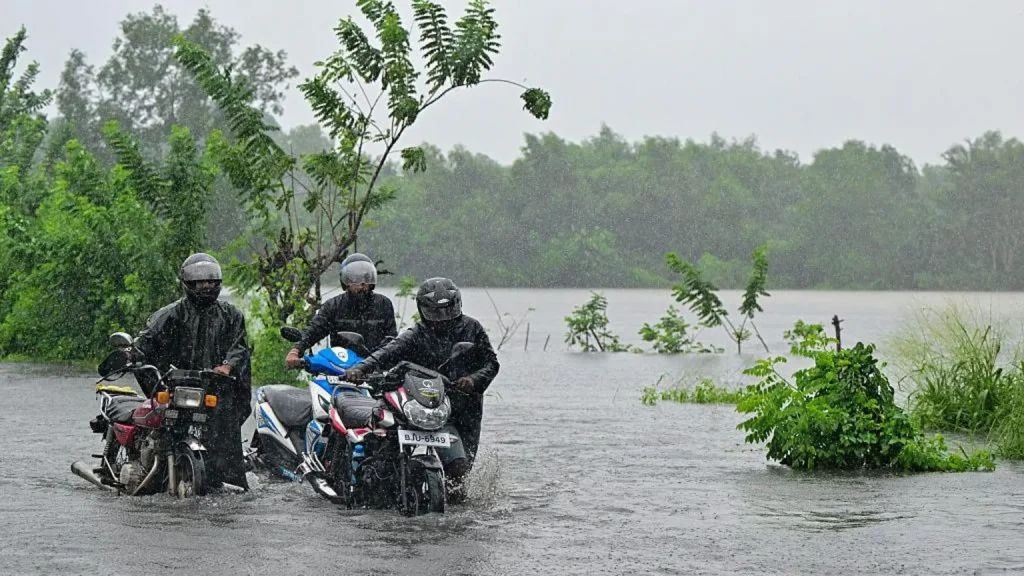
Sri Lanka is facing one of its worst natural disasters in recent years, after unprecedented rainfall caused massive floods and deadly landslides across large parts of the island. At least 56 people have been confirmed dead, with 21 others missing, as the nation struggles to respond to widespread destruction triggered by Cyclone Ditwa.
The Disaster Management Centre (DMC) issued multiple emergency alerts as torrential rains battered central and northern regions. The worst-hit area is the tea-growing district of Badulla, where a massive landslide struck several homes overnight, killing 21 people. Entire families were buried under mud and debris, and rescuers have been working non-stop to search for survivors despite dangerous terrain and heavy downpours.
Cyclone Ditwa intensifies
Cyclone Ditwa initially formed as a deep depression but strengthened rapidly as it approached Sri Lanka’s eastern coastline. Videos circulating online show houses being swept away, flooded roads turning into rushing streams, and residents clinging to rooftops as the waters rise.
River levels continue to surge. The Irrigation Department issued a red-level flood warning for the Kelani River valley, which includes the capital city of Colombo. Officials have urged residents in low-lying areas to evacuate immediately.
Transportation has been severely disrupted. The country’s railway system is almost completely shut down, with all but essential trains cancelled. Several major roads between provinces are underwater or destroyed, leaving some areas accessible only by air rescue.
Dramatic helicopter rescues
During a parliamentary session, MP Ajith Perera raised concerns about an emergency involving a bus stranded near the Kala Wewa reservoir complex. According to him, the bus had been stuck for more than 90 minutes as floodwaters rose. He urged the government to deploy a rescue helicopter.
Justice Minister Harshana Nanayakkara confirmed the incident and stated that the police had ordered the bus to stop due to “life-threatening conditions.” Armed forces were already on site, and a helicopter rescue operation had been authorised.
In Anuradhapura, military helicopters conducted three rescue missions on Friday morning. One rescued a man who had spent the entire night perched on top of a coconut tree to escape the floodwaters, according to the Sri Lankan Air Force.
Tens of thousands affected
Nearly 44,000 people have been directly affected by the extreme weather, the DMC reported. Around 20,500 army personnel have been deployed for rescue operations and relief distribution. Many rural villages are cut off, and rescuers are navigating submerged areas by boat or swimming in dangerous currents.
The crisis has also impacted the school system: the national Advanced Level examinations (A-levels) have been postponed as thousands of students cannot reach testing centres.
Sri Lanka’s meteorological department warns that some regions could receive over 200mm of rainfall in a single day. While monsoon rains are typical during this season, the scale and intensity of the current disaster are highly unusual. The last major flooding event of comparable scale occurred in 2003, when 254 people were killed.
Regional catastrophe
Sri Lanka’s disaster comes as Southeast Asia faces some of its worst flooding in decades. Indonesia has reported at least 127 deaths, while Thailand has confirmed 145, with millions displaced across the region.
Climate experts warn that extreme rainfall events are becoming more frequent due to global climate change. Island nations like Sri Lanka are particularly vulnerable to cyclones and rapid-onset flooding.
The Sri Lankan government has appealed for international assistance. As emergency teams continue their efforts, many citizens remain trapped or missing. Communities are relying heavily on local volunteers and neighbours for help, especially in remote areas where official aid is slow to arrive.
The full extent of the devastation will become clearer only when the waters recede — but for now, Sri Lanka is grappling with a humanitarian crisis of enormous scale.