Jules Pascin: The Painter Who Loved Life to the Fullest
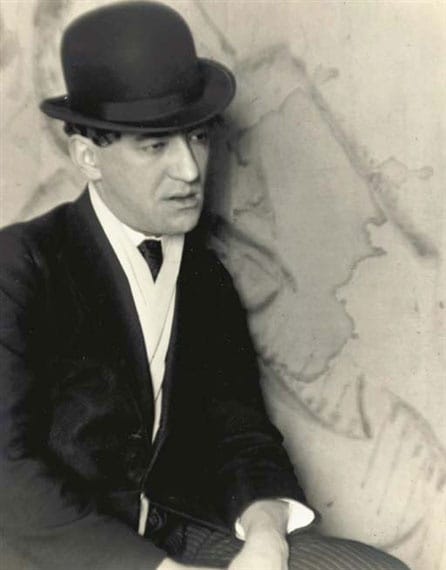
Jules Pascin (March 31, 1885 – June 1, 1930) was a painter of contradictions: an American artist of Bulgarian origin, famous for his delicate portraits of women, whose life was as vivid and turbulent as his art. Seen by some as a hedonist frequenting Parisian cafés with a glass of wine, and by others as a tragic genius capturing tenderness with penetrating depth, Pascin’s existence became as legendary as his artwork.
Born Julius Mordecai Pincas in Vidin, Bulgaria, he grew up in a wealthy Jewish family and felt an early calling to explore the world beyond his provincial roots. He traveled across Europe, studying in Vienna and graduating from the School of Arts in Munich in 1903. His early works appeared in German satirical magazines such as Lustige Blätter and Simplicissimus, before he moved to Paris in 1905, immersing himself in the artistic heart of Montmartre and Montparnasse.
Pascin was not a withdrawn artist. He thrived on the energy of people, cafés, and the city itself. Known as the “Prince of Montparnasse,” he became inseparable from the vibrant life of the Parisian art districts. His studio was a hub for creative minds: Modigliani for a drink, Chagall to discuss color, Hemingway to observe humanity — all drawn into Pascin’s orbit.
Despite his charisma, Pascin battled inner demons. Alcohol, depression, self-doubt, and relentless perfectionism haunted him. His portraits, particularly of women, including prostitutes, conveyed vulnerability, tenderness, and unspoken truths. He painted with dignity and empathy, never romanticizing or judging his subjects.
During World War I, he moved to the United States, capturing urban and rural life with equal curiosity. Returning to Paris in 1921, he married fellow artist Hermine David but continued a tumultuous personal life, including a long-term relationship with muse Lucy Krohg. In the 1920s, he created his large biblical and mythological paintings but was best known for his intimate studies of women.
On June 1, 1930, at age 45, Pascin tragically took his own life in his Montmartre studio, leaving a final blood-written message for Lucy Krohg: “Lucy, forgive me.” His funeral drew hundreds of artists, writers, and admirers along the streets of Paris.
Today, Pascin’s art is celebrated for its humanity, sensitivity, and deep emotional resonance. Jules Pascin lived intensely, loved deeply, and transformed life’s chaos into art — a life extraordinary not just for its work, but for the passionate way he embraced existence itself.