Battle for Chinese chip maker shakes the global car industry
In late September, the Dutch government invoked a Cold War-era emergency law to seize control of Nexperia, a Chinese-owned chip manufacturer operating in the Netherlands.
The extraordinary move sent shockwaves through the global car industry, already reeling from U.S. tariffs and China’s export curbs on rare earth elements.
The Dutch Ministry of Economic Affairs justified the takeover, citing “serious governance issues and actions within Nexperia that posed a threat to national and European economic security.”
“This is an exceptional measure aimed solely at ensuring the continuity of supply and safeguarding critical technologies for the Dutch and European economies,” the statement read.
Beijing reacted angrily, accusing the Netherlands of political interference. China imposed export controls and halted Nexperia chip shipments from its facilities to Europe, while the Dutch government blocked the export of key materials used in chipmaking to China.
The dispute disrupted the global semiconductor supply chain—vital to car production—and exposed yet another front in the economic rivalry between the U.S. and China.
Although China later granted exemptions for civilian chip applications, it did not specify which products qualify. At the same time, Beijing demanded that the Netherlands reverse its takeover of Nexperia.
“China urges the EU to use its influence to encourage the Netherlands to correct its mistake as soon as possible,” said the Chinese Ministry of Commerce.
Weaponizing supply chains
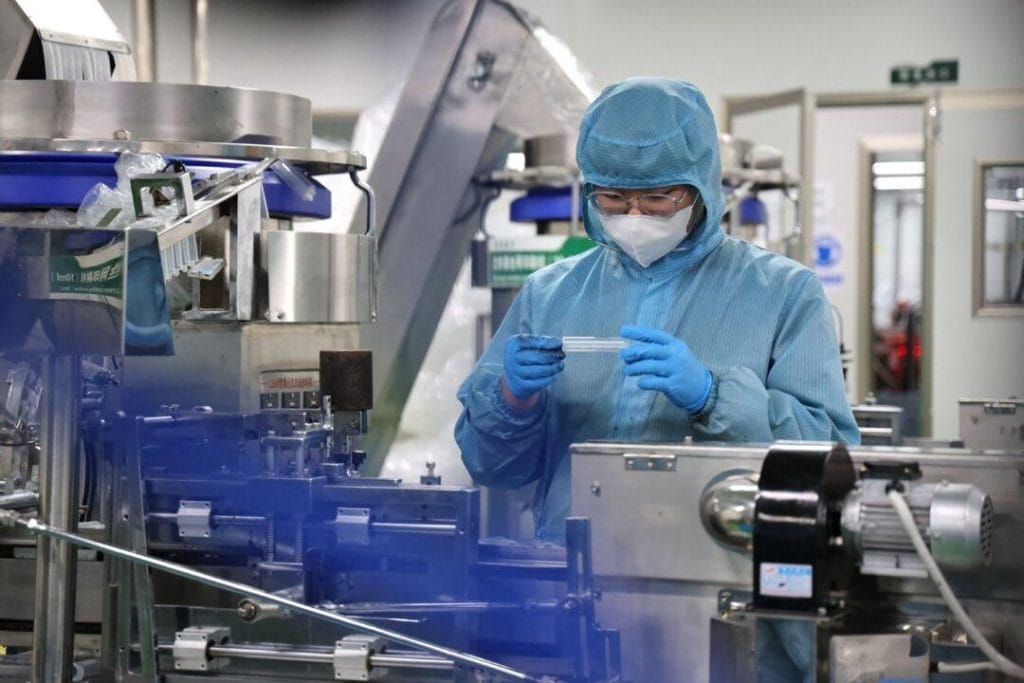
At the center of the controversy is Nexperia, a company that manufactures so-called “legacy” or “building block” semiconductors—essential components for power steering, airbags, and central locking systems.
These are not cutting-edge chips, but they remain indispensable: a single vehicle can contain hundreds of them.
About 70–80% of Nexperia’s production is sent to China for processing and packaging, leaving global carmakers heavily dependent on Chinese facilities.
“Automakers blindsided by the Nexperia mess should be hiring new supply chain executives—they clearly learned nothing from Covid,” wrote China analyst Bill Bishop in his Sinocism newsletter.
The crisis underscores China’s ability to weaponize global supply chains, similar to its dominance over rare earth exports.
“This is not just about semiconductors—it’s a battle over digital sovereignty,” said Bill Echikson, Senior Fellow at the Center for European Policy Analysis.
National security concerns
A Dutch court also suspended former Nexperia CEO Zhang Xuezhen—the founder of its Chinese parent company Wingtech Technology, which is listed on the Shanghai Stock Exchange and partly owned by the Chinese government.
Wingtech has been on the U.S. entity watch list since 2024, and recent amendments now include any company more than 50% owned by listed firms.
Court documents show that U.S. authorities had warned Dutch officials about Nexperia’s leadership and suggested that a management change might exempt the company from restrictions.
However, the Dutch government insists the decision was not made under U.S. pressure, claiming evidence that Nexperia’s production capacity and intellectual property were being transferred to China.
Carmakers on edge
For automakers, the Nexperia case is another reminder of how fragile the industry’s dependencies have become.
“This is what decoupling really looks like—it’s messy and expensive,” said Tom Nunlist, Associate Director at Trivium China.
Although alternative suppliers such as Infineon, NXP, and Texas Instruments exist, switching supply chains is a slow and costly process, as automotive chips are often custom-designed.
A fragile truce
The dispute erupted just as Presidents Donald Trump and Xi Jinping agreed to a one-year trade truce, temporarily lifting some mutual restrictions.
But the Nexperia crisis shows how delicate that agreement truly is.
The European Union continues talks with China to lift export controls on both chips and rare earths, but tensions between Beijing, The Hague, and Brussels remain high.
“This crisis has exposed Europe’s vulnerabilities and highlighted how complex the politics of supply chains has become,” said EU Trade Commissioner Maros Sefcovic.